|
| Angola-Pferdeantilope NA | Arabische Oryx
(Arabischer Spießbock)
(Weiße Oryx) EU ,AS,nEU,NA,AF | Beisa-Oryx
(Ostafrikanischer Spießbock)
(Beisa) EU ,AS,nEU,NA,AF | Büschelohr-Oryx
(Büschelohr-Spießbock)
(Kilimandscharo-Spießbock) AS,NA | Mendesantilope
(Addax) NA,EU ,nEU,AS,AU,AF,SA | | Ostafrikanische Pferdeantilope | Ostafrikanische Rappenantilope
(Roosevelt-Antilope) | Pferdeantilope
(kein Unterartenstatus) EU ,nEU,AS,NA | | Riesenrappenantilope | | Säbelantilope EU ,nEU,AS,NA,AF,AU | | Sambia-Rappenantilope | Sennar-Pferdeantilope
(Sudan-Pferdeantilope) | | Südafrikanische Pferdeantilope AF | | Südafrikanische Rappenantilope EU ,nEU,NA,AS,AF | Südliche Oryx
(Südafrikanischer Spießbock)
(Südafrikanische Oryx) SA,EU ,nEU,AS,NA,AF | | Westafrikanische Pferdeantilope | |
|

|
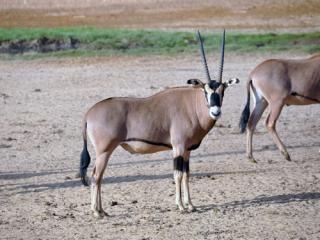
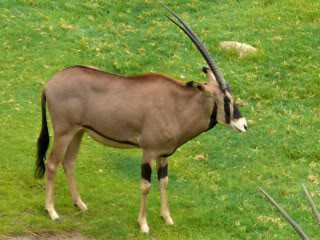
Büschelohr-Oryx
(Büschelohr-Spießbock)
(Kilimandscharo-Spießbock)
|
|
Oryx beisa callotis
(Syn.: Oryx gazella callotis)
(Syn.: Oryx callotis)
|
|
THOMAS, 1892 |
|
| | Quelle zur Taxonomie: | Wilson, Don E./Reeder, DeeAnn (2005): Mammal species of the world: a taxonomic and geographic reference, Volume 1
| | Vorkommen: | östliches Afrika (SO-Kenia, NO-Tansania) | | Lebensraum: | Gras- und Buschland | | Kopf-Rumpf-Länge: | 153 - 170 cm | | Schwanzlänge: | 45 - 50 cm | | Gewicht: | 116 - 209 kg | | Gefährdungsstatus: | VU (gefährdet)
|
|
|
|
|
|
|
|